JIEBO Instrument · JIEBO-F7000
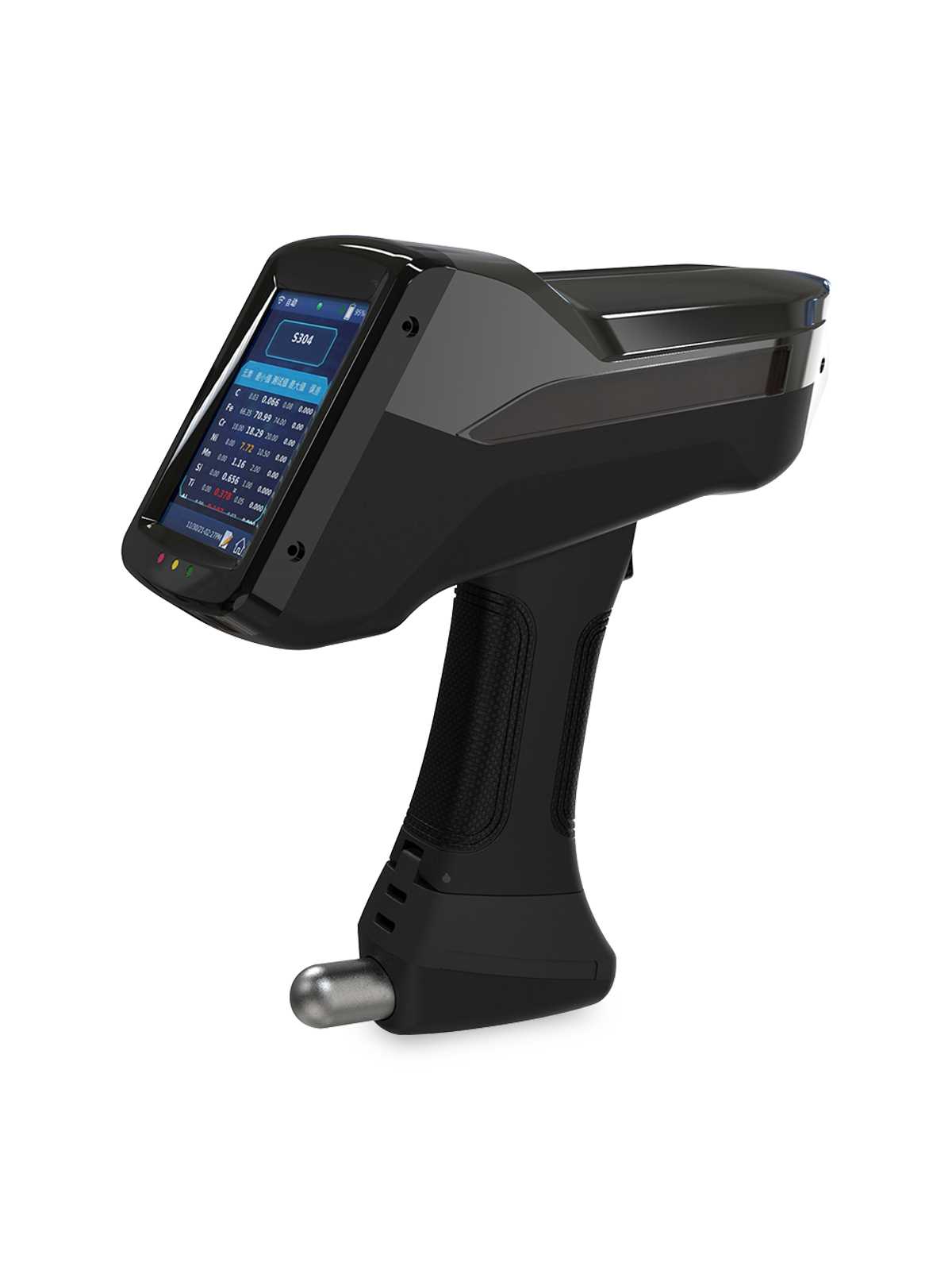
F7000 Pro Handheld LIBS Analyzer
The F7000 Pro is a handheld laser-induced breakdown spectroscopy (LIBS) analyzer for on-site identification and rapid analysis of alloy elements. Unlike X-ray-based handheld systems, LIBS uses a focused laser pulse to ablate a microscopic sample and read its emission spectrum — so it measures light elements that XRF cannot, including beryllium and magnesium, with no ionizing radiation.
Specifications
| Laser class | Class 3B laser, high-energy pulse (eye-safe in normal use) |
|---|---|
| Elements analyzed | Be, Mg, Al, Si, Ti, Cr, Mn, Fe, Ni, Cu, Zn, Cd, Sn, Pb, Bi, Mo, V, Nb, W |
| Analyzing time | < 1 second per measurement |
| Weight | 1.25 kg (including battery) |
| Operating temp / humidity | Optical and mechanical safety switches required for activation |
Typical applications
- Aluminum alloy sorting where magnesium and silicon levels matter
- Beryllium detection in copper alloys (safety screening)
- Battery and lithium-related material identification
- Light-element verification in casting and forging
- Replacing radioactive XRF in regions with strict import controls
Frequently asked questions
LIBS vs XRF — which should I choose?
LIBS measures light elements (Li, Be, Mg, Al, Si) that XRF cannot. LIBS leaves a tiny burn mark while XRF is fully non-destructive. LIBS uses a laser — no ionizing radiation — which simplifies regulatory paperwork in many export markets. Choose XRF for non-destructive identification of heavy alloys; choose LIBS for light-element accuracy or radiation-sensitive deployments.
How small is the laser mark on the sample?
Sub-millimeter, comparable to a single OES spark. Most receiving inspections and PMI workflows treat this as non-destructive in practice.
What about laser safety?
Class 3B with multiple safeguards: a mechanical/optical safety switch requires sample contact before firing, and the laser is automatically collimated to limit eye exposure. Standard laser-safety training and goggles are recommended for the operator.
Is the F7000 Pro fast enough for production sorting?
Yes. Sub-second readouts make it competitive with handheld XRF on alloy ID, and faster on light-element work where XRF cannot quantify at all.